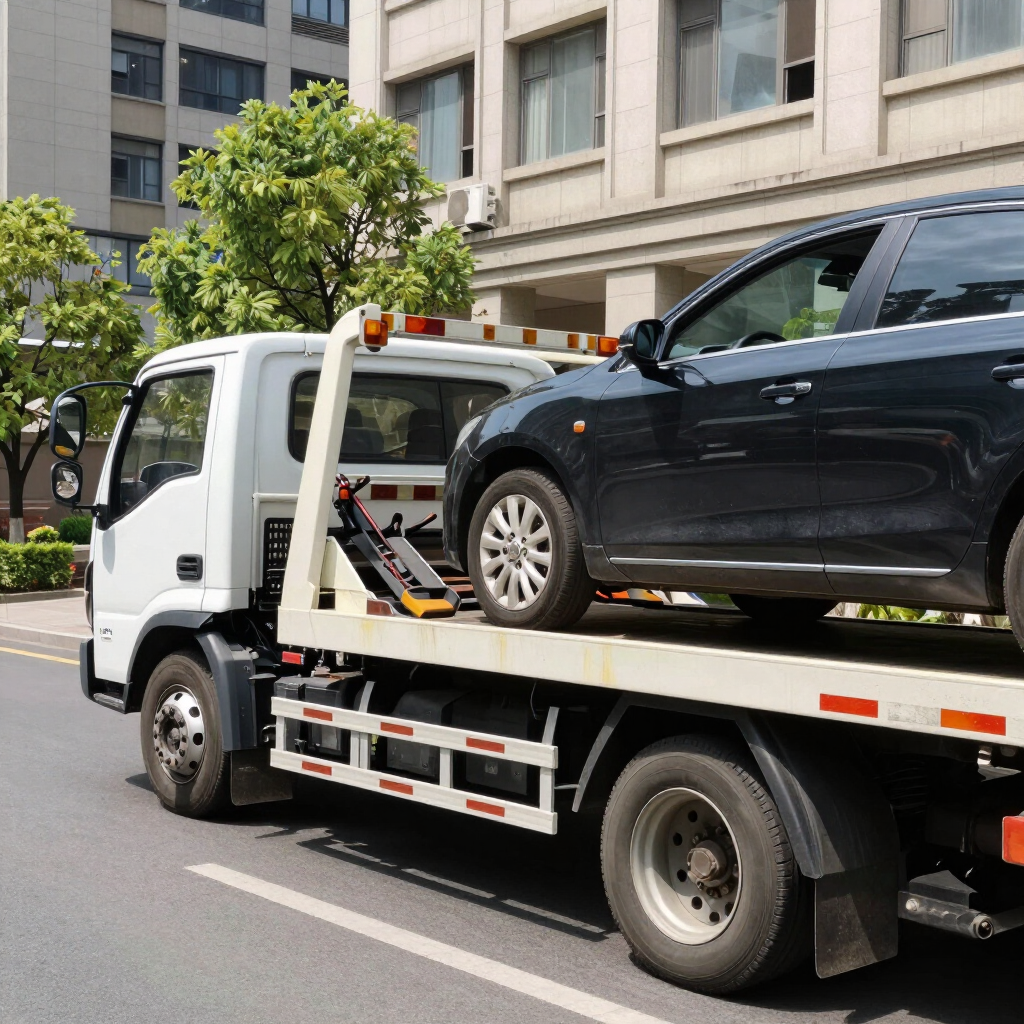
Commercial Vehicle Breakdown on US-80 in Greenwood, LA
Heavy-Duty Towing in Greenwood, LA: What to Do When a Commercial Vehicle Breaks Down on US-80
US-80 runs east-west through Caddo Parish, connecting Greenwood near the Texas state line through Shreveport and toward Bossier City. Because it links cross-state freight with I-20 interchange traffic, a disabled 80,000-lb loaded semi here does not just slow traffic — it blocks lanes and creates serious safety exposure within minutes. Knowing who handles commercial vehicle recovery on this corridor before a breakdown happens is the difference between a controlled two-hour recovery and a six-hour road closure.
Greenwood sits at the western edge of that freight flow, making it a high-frequency transit point for long-haul and regional carriers moving goods between Texas and Louisiana. When a big rig goes down on this stretch, the response needs to be fast, local, and equipped for the actual weight class involved.
This post walks through the equipment required, what the recovery process looks like step by step, and why the scope of heavy-duty towing extends well beyond a simple mechanical breakdown.
Why US-80 Through Greenwood Demands Specialized Towing
US-80 handles a steady mix of long-haul semi traffic, agricultural transport, and industrial loads moving between Caddo and Bossier parishes. That volume means a disabled commercial vehicle creates an immediate lane-blocking emergency, not a minor inconvenience that can wait.
A fully loaded Class 8 semi weighs up to 80,000 lbs. Standard light-duty wreckers are rated for roughly 10,000 to 26,000 lbs. Sending the wrong equipment does not just delay the recovery — it risks secondary damage to the vehicle, liability for cargo loss, and a longer road closure while the right truck has to be called in afterward.
Specialized heavy-duty operators arrive with equipment already rated for the gross vehicle weight, which means the recovery starts immediately rather than stalling at the scene.
What Equipment Actually Handles a Commercial Vehicle?
Heavy-duty recovery requires purpose-built gear rated for vehicles that standard wreckers cannot safely move. Each piece serves a specific role depending on the incident type.
A rotator tow truck has a 360-degree rotating boom, which lets the operator reach a vehicle that has gone into a ditch, jackknifed across lanes, or rolled onto an embankment — any position where a straight-line approach is not possible. Without this capability, certain recovery scenarios simply cannot be completed safely.
An underlift heavy wrecker handles straightforward mechanical breakdowns where the vehicle is upright and accessible — a drive axle failure, a blown tire that disabled the rig in a safe position, or a fuel or DEF issue that left the truck dead on the shoulder.
For rollovers, airbags and catch bags are placed beneath an overturned trailer to right it gradually and under control. This method preserves cargo integrity and reduces frame damage compared to chain-and-drag approaches. All rigging and chains used are rated for commercial gross vehicle weights — not standard wrecker hardware. You can see the full equipment inventory to understand what each piece is designed to handle.
What Happens from the Call to Road Clearance?
Recovery moves faster when everyone knows what to expect. Here is how the process works from first contact to cleared road.
The call: Provide your mile marker or nearest cross street, vehicle type, whether the load is on or off, and a brief description of what happened — breakdown, jackknife, rollover. This lets dispatch determine which unit to roll immediately rather than reassessing at the scene.
Dispatch assessment: A loaded reefer that has jackknifed needs a rotator and possibly airbag equipment. A drive axle mechanical failure on an unloaded flatbed needs an underlift wrecker. Getting this right on the call shortens total scene time significantly. 24/7 emergency dispatch means this assessment happens any hour, any day.
On-scene evaluation: Before rigging, the operator checks ground conditions, load shift, rollover angle, and any fluid leaks. If there are cargo spills or fluid on the roadway, that factors into the recovery sequence and cleanup scope.
Recovery: Depending on the incident, this may involve a rotator pull, airbag lift, or standard underlift. For rollovers with shifted cargo, catch bags are positioned to control the load as the trailer is righted.
Clearance and transport: Once the vehicle is secured, it moves to a repair facility or safe staging location. Accident debris and fluid cleanup are part of full clearance service when applicable.
Timeline: A straightforward mechanical breakdown tow on an accessible shoulder moves quickly. A rollover recovery with a loaded trailer, cargo concerns, and soft ground conditions is a multi-hour operation. Honest framing here matters — the complexity of the incident, not the clock, drives total time.
Does Heavy-Duty Towing Cover Rollovers — Not Just Breakdowns?
Yes — the full scope of commercial vehicle recovery includes mechanical breakdowns, tire failures, fuel and DEF problems, jackknife events, rollovers, accident recovery, and off-road situations like vehicles in ditches or on embankments.
Rollover recovery is the most equipment-intensive scenario on this list. It typically requires a rotator, airbags, catch bags, and coordination with cargo owners or freight brokers if the load is damaged or hazardous. Fluid recovery and roadway debris removal are part of the clearance when spills are involved.
Fleet managers should note that many carrier insurance policies and DOT compliance requirements specify the use of certified heavy-duty operators for recovery events. Confirming your vendor meets that standard before a breakdown happens avoids a compliance problem on top of an already stressful situation.
Fall Freight Season: When Breakdown Risk Peaks on US-80
Louisiana harvest season runs roughly September through November, when soybeans, cotton, and sugarcane all generate heavy agricultural transport volume on US-80 and connecting rural routes. That seasonal surge compounds the national peak freight period tied to pre-holiday shipping, meaning the corridor sees some of its highest annual commercial traffic in the same window.
Higher mileage, fully loaded runs, and equipment already under strain from the driving season combine to elevate breakdown frequency during this period. A 2 a.m. breakdown in October on US-80 needs the same caliber response as a noon call on a Tuesday — 24-hour availability is not a convenience during fall season; it is a requirement.
Fleet managers covering Greenwood and western Caddo Parish routes are better positioned having a heavy-duty vendor in the contact list before the harvest window opens than scrambling to find one roadside.
When a commercial vehicle goes down on US-80, having an operator already familiar with the corridor — and already equipped for the vehicle class — is what keeps a breakdown from becoming a multi-hour road closure with compounding costs.
Schedule your vendor evaluation now and explore the full range of heavy-duty towing services available through Rials Towing Inc before the next load rolls out.